When Valeria needed money for a mathematics competition, Don Chema sold the old television.
When Lucía asked him why the living room suddenly looked empty, he laughed.
“That television was getting lazy anyway.”
Years passed.
The girls grew.
And Don Chema developed one rule.
“You may be poor today,” he told them, “but never think small because of it.”
Sofía became obsessed with law.
As a teenager, she once spent an entire evening arguing with Don Chema because a teacher had punished the whole class for something only two students had done.
Advertisement
“You should become a lawyer,” Chema finally told her.
Sofía crossed her arms.
“Maybe I will.”
“Good. Then you can argue professionally instead of doing it for free in my kitchen.”
Valeria loved numbers.
Receipts fascinated her.
Budgets fascinated her.
At sixteen, she reorganized all of Don Chema’s bills and discovered he had been overpaying a service fee for almost two years.
Lucía was different.
She asked questions nobody wanted asked.
Why?
Who said?
Where is the proof?
What happened before that?
Advertisement
What are they hiding?
Don Chema sometimes watched all three girls studying around the kitchen table beneath a single weak bulb and wondered how something beautiful had grown out of so much abandonment.
He never called himself their savior.
If anyone tried, he stopped them.
“They saved me first,” he would say.
Eventually, the girls became adults.
They left home one by one.
Sofía studied law.
Valeria studied accounting and financial auditing.
Lucía went into investigative journalism.
Don Chema retired.
Advertisement
For the first time in more than three decades, he no longer woke before sunrise to clean classrooms.
His body was exhausted.
His knees hurt constantly.
His back never truly stopped aching.
His pension was small.
But he considered himself rich.
Three daughters called him Papá.
That was enough.
Then, one Tuesday morning, someone knocked on his door.
A court officer handed him an envelope.
Don Chema signed for it.
Closed the door.
Sat at his kitchen table.
Opened the document.
Advertisement
And felt his legs turn numb.
The new principal of his old school, Mr. Robles, had accused him of stealing school materials worth 850,000 pesos.
Computers.
Projectors.
Construction supplies.
Maintenance equipment.
Electrical materials.
Inventory records claimed the items had disappeared during the final years of Don Chema’s employment.
Several forms carried his employee number.
Some even appeared to carry his signature.
The accusation was devastating.
Don Chema read the pages again.
Then again.
He could barely understand them.
Stealing?
Advertisement
He had once walked three blocks back to a grocery store because a cashier accidentally gave him twenty pesos too much.
Now official documents described him as a thief.
Worse, the accusation involved public funds.
The prosecution treated the case as serious embezzlement.
If convicted under the charges presented against him, Don Chema could spend the final years of his life behind bars.
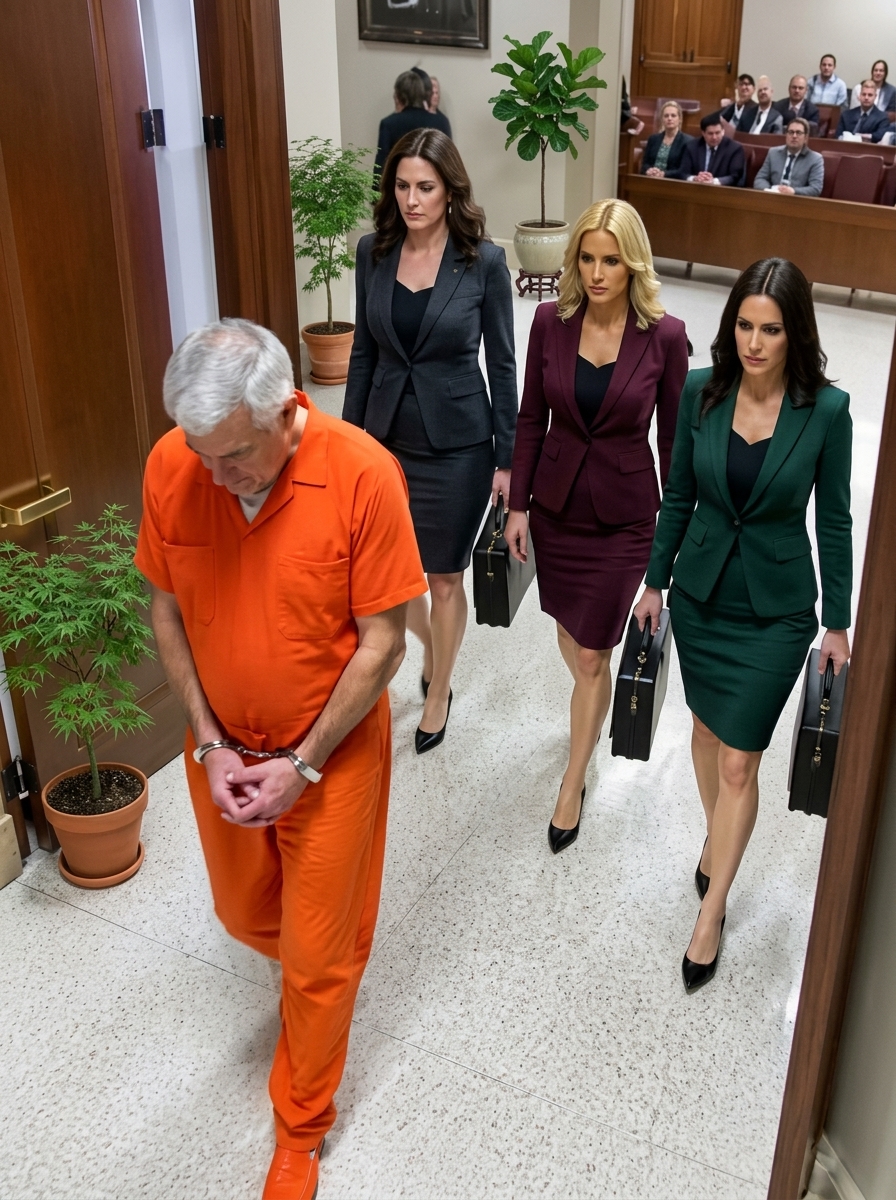
He had no money for an expensive legal defense.
He also had something else working against him.
Advertisement
Paper.
Stacks of it.
Signed forms.
Inventory transfers.
Witness statements from administrators.
Records showing that Don Chema had access to storage rooms.
Mr. Robles presented himself as the responsible new principal who had discovered irregularities after taking office.
He told investigators he was only protecting public resources.
“I have nothing personal against the former janitor,” Robles said. “But accountability must apply to everyone.”
Those words appeared in local news reports.
People who had known Don Chema for decades were stunned.
Advertisement
Some defended him.
Others began whispering.
Maybe poverty had finally tempted him.
Maybe he had been stealing slowly for years.
Maybe the kind old janitor had fooled everyone.
Don Chema stopped going outside.
The shame hurt more than the fear.
Then came the trial.
On the morning the court was expected to issue its decision, Don Chema dressed carefully.
He wore the old blue suit he had purchased years earlier for Sofía’s graduation.
The sleeves were slightly short.
The shoulders had faded.
May you like

One button had been replaced with another that did not match.
But it was the best thing he owned.
He sat in the defendant’s chair with both hands trembling.
He kept looking toward the courtroom doors.
His daughters were not there.
At least, that was what everyone thought.
Mr. Robles sat several meters away in a dark tailored suit.
Calm.
Confident.
His lawyer had spent hours explaining the documents.
Materials were ordered.
Materials were received.
Materials disappeared.
Don Chema had access.
Advertisement
Forms contained his identification.
Case closed.
The prosecutor argued that sympathy should not replace evidence.
“The defendant’s personal history may be touching,” he said. “But good deeds do not erase financial crimes.”
Don Chema lowered his head.
His public defender had challenged some of the documents.
But without expert analysis, without independent financial records, and without witnesses capable of explaining where the missing materials had gone, the defense seemed weak.
Then Mr. Robles took the stand.
“Did you ever personally see Don Chema steal these materials?” the defense attorney asked.
Advertisement
“No.”
“Did anyone?”
“I cannot say.”
“Then why accuse him?”
Robles folded his hands.
“Because his identification appears repeatedly on the records.”
Don Chema stared at him.
Something about those words felt wrong.
He remembered the old school office.
He remembered supervisors asking him to sign blank maintenance slips because they were in a hurry.
He remembered administrators borrowing his employee stamp to process deliveries while he unloaded trucks.
At the time, nobody had considered it dangerous.
He had trusted them.
Advertisement
That trust was now being used like a rope around his neck.
The judge returned after a recess.
The courtroom became silent.
Don Chema’s public defender whispered, “Whatever happens, remain calm.”
Whatever happens.
Those words terrified him.
The judge reviewed several pages.
Don Chema looked toward the doors one final time.
Nothing.
His chest tightened.
Maybe Sofía could not leave work.
Maybe Valeria’s flight had been delayed.
Maybe Lucía was still traveling.
He did not blame them.
Never.
They had lives.
Advertisement
Careers.
Families.
He had raised them to move forward, not to carry an old man forever.
The judge lifted the gavel.
Then the courtroom doors slammed open.
Everyone turned.
Three women stood in the entrance.
Sofía was in front.
She wore a dark lawyer’s suit and carried a thick red file beneath one arm.
Valeria stood beside her with two hard drives, several sealed evidence folders, and the expression of someone who had not slept in days.
Lucía was on the other side, holding a phone and followed by two federal investigators.
Advertisement
Behind them came another man pushing a metal cart loaded with document boxes.
Don Chema stopped breathing.
“Papá,” Sofía said.
His lips parted.
“Sofía?”
Mr. Robles went pale.
The judge struck the desk.
“What is the meaning of this?”
Sofía stepped forward.
“Your Honor, my name is Sofía Hernández. I am the defendant’s daughter and a licensed attorney. I request permission to submit newly discovered evidence directly connected to the alleged theft.”
Robles’s attorney stood immediately.
“Objection! The evidentiary stage is closed.”
Advertisement
Valeria placed one sealed folder on the table.
Sofía did not even look at him.
“The evidence indicates that the crime did occur.”
The courtroom erupted in whispers.
Don Chema stared at her in shock.
Sofía turned toward him.
“But our father didn’t commit it.”
Silence returned.
She opened the red file.
“For the past eleven days, my sisters and I have reconstructed twenty-eight months of purchasing and inventory activity at the school.”
Robles’s face tightened.
Valeria stepped beside her.
Advertisement
She had spent years working in financial auditing.
She knew exactly what forged procurement trails looked like.
And the moment she saw the accusation against Don Chema, one detail bothered her.
The supposed stolen materials had been entered as received.
But many invoices came from suppliers she could not verify.
She began tracing tax records.
Addresses.
Bank accounts.
Invoice numbers.
Delivery dates.
Then she found the first crack.
Three companies that had supposedly supplied materials worth hundreds of thousands of pesos shared the same registered telephone number.
Advertisement
Another company listed an address belonging to an abandoned building.
A fifth existed only on paper.
Valeria displayed copies of the records.
“These companies invoiced the school,” she explained. “But several of them did not possess the infrastructure to provide the goods listed.”
Robles’s attorney shook his head.
“That does not connect my client.”
Valeria looked directly at Mr. Robles.
“I’m getting there.”
Lucía almost smiled.
She had approached the investigation differently.
She interviewed former employees.
Retired administrators.
Security guards.
Advertisement
Teachers.
Delivery drivers.
One former secretary remembered that months after Don Chema retired, Mr. Robles ordered old paper records destroyed.
He called them useless storage.
Lucía tracked down the maintenance worker who had removed the boxes.
He admitted that several boxes had not gone directly to recycling.
They had first been stored in an unused sports warehouse.
Lucía went there.
Most records were gone.
But not everything.
Hidden behind broken desks, she found a damaged computer tower that had belonged to the former administrative office.
The hard drive was recoverable.
And inside it were archived inventory files.
Valeria compared them with the versions submitted to court.
They were different.
Completely different.
The courtroom seemed to shrink around Mr. Robles.
Sofía placed two documents in front of the judge.
“This is the original inventory record created before my father retired.”
Then she placed another beside it.
“This is the version submitted as evidence.”
Dates had been altered.
Signatures had been added.
Employee identification numbers had been moved from one transaction to another.
Don Chema’s name had been inserted into records created months after he had already retired.
The judge leaned forward.
“Months after?”
“Yes, Your Honor.”
Don Chema covered his mouth.
Robles stood.
“This is absurd! Digital files can be manipulated.”
One of the federal investigators stepped forward.
“The recovered device was handled under documented chain-of-custody procedures after it was turned over. Forensic analysis identified metadata consistent with original creation dates and later unauthorized alterations.”
Robles sat back down.
His confidence vanished.
But Sofía was not finished.
“Your Honor, the accusation claims my father participated in receiving a shipment of thirty-two computers on March 14.”
She looked at Don Chema.
“Papá, where were you on March 14?”
Don Chema blinked.
“I… I don’t remember.”
Sofía’s voice softened.
“I do.”
She opened another folder.
“March 14 was the day of my civil wedding.”
A photograph appeared on the courtroom monitor.
Don Chema stood beside Sofía in a small government office, smiling proudly in that same blue suit.
The timestamp matched the date on the delivery receipt.
More importantly, official retirement records showed Don Chema had left school employment six months before the alleged delivery.
Someone had created a receipt using his old information.
The courtroom exploded.
Reporters started typing.
The judge called for order.
Robles whispered desperately to his attorney.
Then Valeria delivered the next blow.
“The missing 850,000 pesos were not spent on goods that disappeared.”
She paused.
“In several cases, the goods never existed.”
The money had traveled through shell suppliers.
From there, funds moved into intermediary accounts.
Then smaller transfers appeared.
Repeated.
Carefully divided.
Designed not to attract attention.
Valeria followed them.
One account belonged to the brother-in-law of Mr. Robles.
Another was controlled by a former administrative employee.
A third made repeated cash withdrawals shortly after receiving school-related payments.
But the final destination was even more damaging.
Valeria projected the bank records.
Multiple deposits had reached an account connected to a property purchased by Mr. Robles’s wife.
Robles stood so fast that his chair nearly fell.
“My wife has nothing to do with this!”
Valeria looked at him coldly.
“The first deposit arrived forty-eight hours after the school paid a supplier for equipment that was never delivered.”
The judge stared at Robles.
His attorney stopped speaking.
Lucía stepped forward next.
“There’s more.”
She had found a former night security guard named Ernesto.
At first, he refused to talk.
Then Lucía showed him Don Chema’s photograph.
Ernesto’s expression changed.
Years earlier, Don Chema had helped Ernesto’s son return to school after the boy was expelled from another institution.
Ernesto agreed to meet.
He told Lucía that he had seen Mr. Robles entering the administrative office at night shortly before the audit.
Not once.
Repeatedly.
He also remembered Robles carrying boxes of old records to his car.
But Ernesto had been afraid to report it.
He needed his job.
He had children.
Then Lucía asked the question that changed everything.
“Did the school have cameras?”
Ernesto nodded.
The official claim was that the camera system had been erased during an equipment upgrade.
That was not entirely true.
The school stored weekly backups on an old external drive before the upgrade.
Ernesto had been told to throw it away.
He never did.
He used it at home to store family photographs.
The deleted school footage remained partially recoverable.
Federal forensic technicians restored several clips.
Sofía handed the court a certified copy.
The footage played.
Mr. Robles appeared on screen.
Late at night.
Inside the administrative office.
Opening cabinets.
Removing folders.
Photographing documents.
Then, in another clip, he used a stamp belonging to the maintenance department.
Don Chema’s old stamp.
Nobody spoke.
Robles looked as if the air had been sucked from the room.
The video continued.
A second man entered.
They placed documents on a desk.
The second man signed several sheets.
Robles stamped them.
One of those sheets was later submitted to court as proof against Don Chema.
The judge stopped the video.
“Mr. Robles.”
Robles looked up.
“Can you explain this?”
“I was performing administrative duties.”
“At eleven forty-three at night?”
“I work late.”
“With a retired employee’s identification stamp?”
Robles said nothing.
Sofía closed the file.
“For twenty-four years, our father taught us that poverty was never permission to become dishonest.”
She looked around the courtroom.
“He raised three orphan girls on a janitor’s salary. There were nights when he pretended he had already eaten because there wasn’t enough food for four people.”
Don Chema lowered his head.
Sofía’s voice broke slightly.
“He sold his television to pay for Valeria’s school competition.”
Valeria began crying.
“He walked forty minutes to work for six months because Lucía needed dental treatment and he could no longer afford bus fare every day.”
Lucía wiped her cheek.
“He never told us.”
She turned toward Robles.
“And you believed that because he was poor, old, and unable to hire an expensive legal team, he was the perfect person to blame.”
Mr. Robles looked toward the exit.
The two investigators moved closer.
Then came the final twist.
The one nobody expected.
Not even Don Chema.
Sofía reached into the red folder and removed a yellowed sheet of paper protected inside transparent plastic.
“Your Honor, twenty-four years ago, someone left a newborn baby in a cardboard box at this school.”
Don Chema looked up sharply.
It was the note.
Sofía’s note.
“I don’t have money to feed her. Please, take good care of her.”
Sofía continued.
“My father kept this for twenty-four years.”
The judge looked confused.
“What does that have to do with this case?”
Sofía turned toward Lucía.
Lucía walked toward a woman sitting quietly in the back row.
She was elderly.
Thin.
Nervous.
The woman stood.
Sofía could barely continue.
“While investigating the forged records, my sister interviewed former school employees. During that investigation, she found someone else.”
Don Chema stared at the woman.
He did not recognize her.
Sofía’s voice shook.
“My biological mother.”
The entire courtroom went silent.
Don Chema gripped the table.
Sofía’s biological mother had spent twenty-four years believing her daughter had disappeared into the system.
At seventeen, homeless and terrified, she had left the newborn inside the school because she knew the building opened before sunrise.
She had watched from across the street.
And she had seen one person find the box.
Don Chema.
She saw him remove his jacket.
Wrap the baby against his chest.
Carry her inside.
Years later, shame prevented her from returning.
She built another life.
But she quietly searched for Sofía.
Lucía found her through old neighborhood records while investigating people connected to the school.
The woman stepped forward crying.
“I saw him save her,” she whispered.
Don Chema covered his face.
Sofía walked toward him.
For twenty-four years, she had wondered whether she had been thrown away because nobody wanted her.
Now she knew the truth was more complicated.
Her mother had been a frightened child herself.
But the most important truth had never changed.
Don Chema had chosen her.
Not once.
Every day.
For twenty-four years.
The judge removed his glasses.
Even the prosecutor looked shaken.
Then the judge turned toward Don Chema.
“Señor José María, please stand.”
His legs trembled.
Sofía helped him up.
The judge looked at the evidence spread across the courtroom.
The falsified inventory.
The shell companies.
The banking records.
The surveillance footage.
The impossible delivery dates.
Then he spoke.
“The case against this defendant cannot stand.”
Don Chema’s eyes filled.
The judge continued.
“In light of the new evidence, I am ordering the immediate dismissal of the charges against Señor José María.”
Don Chema collapsed into Sofía’s arms.
Valeria reached him next.
Then Lucía.
For the first time since the accusation began, the old janitor cried without trying to hide it.
But the judge was not finished.
He looked directly at Mr. Robles.
“I am also ordering that the evidence presented today be referred immediately for criminal investigation into fraud, falsification of official documents, misappropriation of public funds, obstruction of justice, and the deliberate attempt to implicate an innocent person.”
Two investigators approached Robles.
His face changed completely.
“No,” he whispered.
One investigator instructed him to remain still.
Robles looked desperately around the courtroom.
Twenty minutes earlier, he had expected to watch Don Chema leave in disgrace.
Now cameras were pointed at him.
Reporters blocked the hallway.
And the janitor he had chosen because he seemed powerless was surrounded by the three women that poverty had never managed to defeat.
The story spread rapidly.
First through Ecatepec.
Then Mexico City.
Then across the country.
Headlines focused on the courtroom surprise.
But millions of people became fascinated by something deeper.
A janitor earning almost minimum wage had raised three girls who were not biologically his.
One became a lawyer.
One became an auditor.
One became an investigative journalist.
And twenty-four years later, the same education Don Chema had sacrificed everything to give them became the weapon that saved his freedom.
The case against Robles expanded.
Investigators examined previous school contracts.
More suspicious payments surfaced.
Other employees were questioned.
Additional irregularities were discovered.
The scandal grew far beyond the original 850,000 pesos.
But Don Chema wanted little to do with the attention.
Reporters gathered outside his small house.
Television programs requested interviews.
People offered donations.
Some called him a hero.
He rejected the word every time.
“I cleaned floors,” he said. “I raised my daughters. That’s all.”
One reporter asked him how he felt knowing his daughters had saved him.
Don Chema smiled.
“They’ve been saving me since the day they entered my house.”
Weeks later, the school invited him back.
At first, he refused.
He was embarrassed.
Then Sofía convinced him.
When Don Chema walked through the school gate again, hundreds of students were waiting in the courtyard.
Teachers.
Former students.
Parents.
Old colleagues.
Some people Don Chema had not seen in twenty years.
A banner hung above the entrance.
WELCOME HOME, DON CHEMA.
He stopped walking.
The applause began.
Then grew louder.
Students surrounded him.
One former student, now a doctor, hugged him and reminded him of the day Don Chema had paid for his lunch when he had no money.
Another, now an engineer, remembered Don Chema fixing his broken shoes so he would not be embarrassed during graduation.
A woman brought her teenage daughter and said, “This man convinced me not to quit school.”
Don Chema looked overwhelmed.
He had spent his entire life believing he was only a janitor.
Now hundreds of people were showing him the fingerprints he had left on lives he barely remembered touching.
Then three women appeared at the front of the crowd.
Sofía.
Valeria.
Lucía.
Sofía carried a small cardboard box.
Don Chema stared at it.
His eyes immediately filled.
She placed it on a table.
Inside was a new yellow blanket.
Not dirty.
Not torn.
Soft.
Warm.
Sofía took her father’s hand.
“Twenty-four years ago,” she said, “someone left me here inside a box.”
The courtyard became silent.
“I spent years thinking that was the worst thing that ever happened to me.”
She looked at Don Chema.
“I was wrong.”
Her voice cracked.
“Because this was also where you found me.”
Don Chema began crying.
Valeria took his other hand.
Lucía stood behind him and rested her head against his shoulder.
Sofía continued.
“You always said you didn’t rescue us.”
She smiled through tears.
“You were right.”
Don Chema looked confused.
Sofía squeezed his fingers.
“You didn’t rescue us once.”
“You rescued us every morning when you got up before sunrise.”
Valeria continued.
“Every time you skipped dinner.”
Lucía said, “Every time you worked while you were sick.”
Sofía finished.
“Every time you chose us when choosing us was difficult.”
Don Chema could no longer speak.
The students began applauding again.
This time he did not hide his face.
Months later, after the investigation ended, Don Chema received something he had never expected.
Former students created a scholarship in his name.
Not because he had been falsely accused.
Not because the trial became famous.
But because hundreds of them remembered the same thing.
A cleaning man who noticed children everyone else overlooked.
The scholarship was created for students without parents or with severe financial hardship.
Its name was painted on a plaque near the school entrance.
THE JOSÉ “DON CHEMA” SCHOLARSHIP.
Underneath were the words he had repeated for decades:
“Being poor is difficult. Being cruel is a choice.”
On the day the plaque was unveiled, Don Chema arrived wearing his old blue suit.
The mismatched button was still there.
Sofía had offered to buy him a new suit.
He refused.
“This one has good luck.”
She laughed.
“You almost went to prison wearing that suit.”
“Yes,” Don Chema replied.
“And I walked out with my three daughters.”
That evening, the four of them returned to Don Chema’s small house.
Valeria cooked.
Lucía complained that Valeria used too much salt.
Sofía argued that neither of them knew how to make tortillas properly.
For a few minutes, Don Chema simply sat at the kitchen table listening.
The same table where three little girls had once done homework beneath a weak light.
The same kitchen where he had divided four eggs between four plates.
The same house where he had sometimes cried silently after the girls went to sleep because he did not know how he would pay the next electricity bill.
Now those girls were women.
Strong women.
Educated women.
Women who had walked into a courtroom when everyone else thought their father was finished.
Sofía noticed him staring.
“What?”
Don Chema shook his head.
“Nothing.”
“Papá.”
He smiled.
“I was just thinking.”
“About what?”
Don Chema looked at the three of them.
Then he remembered the judge who had asked him, twenty-four years earlier, what a poor janitor could possibly offer an abandoned child.
At the time, Don Chema had answered with the only things he possessed.
Two hands.
And a heart that would never abandon her.
He had believed it was not much.
Now he understood.
Sometimes, what changes a life is not money.
Not power.
Not a famous name.
Sometimes it is simply one person refusing to walk away.
Don Chema reached across the table and took Sofía’s hand.
Then Valeria’s.
Then Lucía’s.
“I used to worry,” he said quietly, “that I couldn’t give you enough.”
Sofía smiled.
“You gave us everything.”
Outside, Ecatepec moved through another noisy night.
Cars passed.
Dogs barked.
Music played somewhere down the street.
Nothing about Don Chema’s tiny home looked important from the outside.
There were no gates.
No luxury cars.
No expensive furniture.
But inside sat a retired janitor who had once owned almost nothing.
And three daughters who knew exactly how wealthy he truly was.
Twenty-four years earlier, Don Chema had found a freezing baby in a cardboard box and whispered that she would never be alone again.
He had kept that promise.
What he never imagined was that one day, when the entire world seemed ready to abandon him, she would walk through a courtroom door with her sisters beside her…
and make sure their father was never alone either.