Training took over.
I pulled the EpiPen from my purse.
Removed the safety cap.
Pressed it hard against the outside of his thigh.
“Call 911!”
Nobody moved.
For one horrifying second, nearly twenty adults stood around watching.
Watching my child struggle to breathe.
Watching me hold him upright.
Watching his face change color.
“CALL 911!”
Nathan finally reacted.
He grabbed his phone.
Patricia took a step forward.
“Did you really have to stab him with that thing?”
I looked at her.
Advertisement
I will never forget that question.
Not as long as I live.
My child was fighting for air, and she was worried I had overreacted.
“I gave him epinephrine because he is having an anaphylactic reaction.”
Brooke folded her arms.
“He barely ate anything.”
My head snapped toward her.
“What did he eat?”
Nothing.
“What did he eat, Brooke?”
She looked at Patricia.
That glance told me everything.
I felt something inside me change.
Not fear.
Not yet.
Something colder.
Advertisement
“What was in the sauce?”
Brooke finally muttered, “Peanuts.”
Nathan lowered his phone.
“What?”
Patricia stepped in immediately.
“It was only a tiny amount.”
My entire body went still.
“You knew?”
“I didn’t think—”
“You knew?”
“He needs to stop being so sensitive to everything.”
I stared at the woman who had just admitted she knowingly exposed my three-year-old child to something that could kill him.
Leo made a weak sound against me.
That ended the conversation.
Nothing mattered except keeping him alive.
Advertisement
The ambulance arrived minutes later.
Those minutes felt endless.
Paramedics took over immediately.
Oxygen.
Monitoring.
Additional treatment.
Questions.
How much exposure?
How long ago?
Previous reactions?
Weight?
Medication?
I answered everything.
Nathan rode with us.
He held Leo’s shoe because it had fallen off when the paramedics lifted him onto the stretcher.
He barely spoke.
At the hospital, I sat beside Leo while machines tracked every heartbeat.
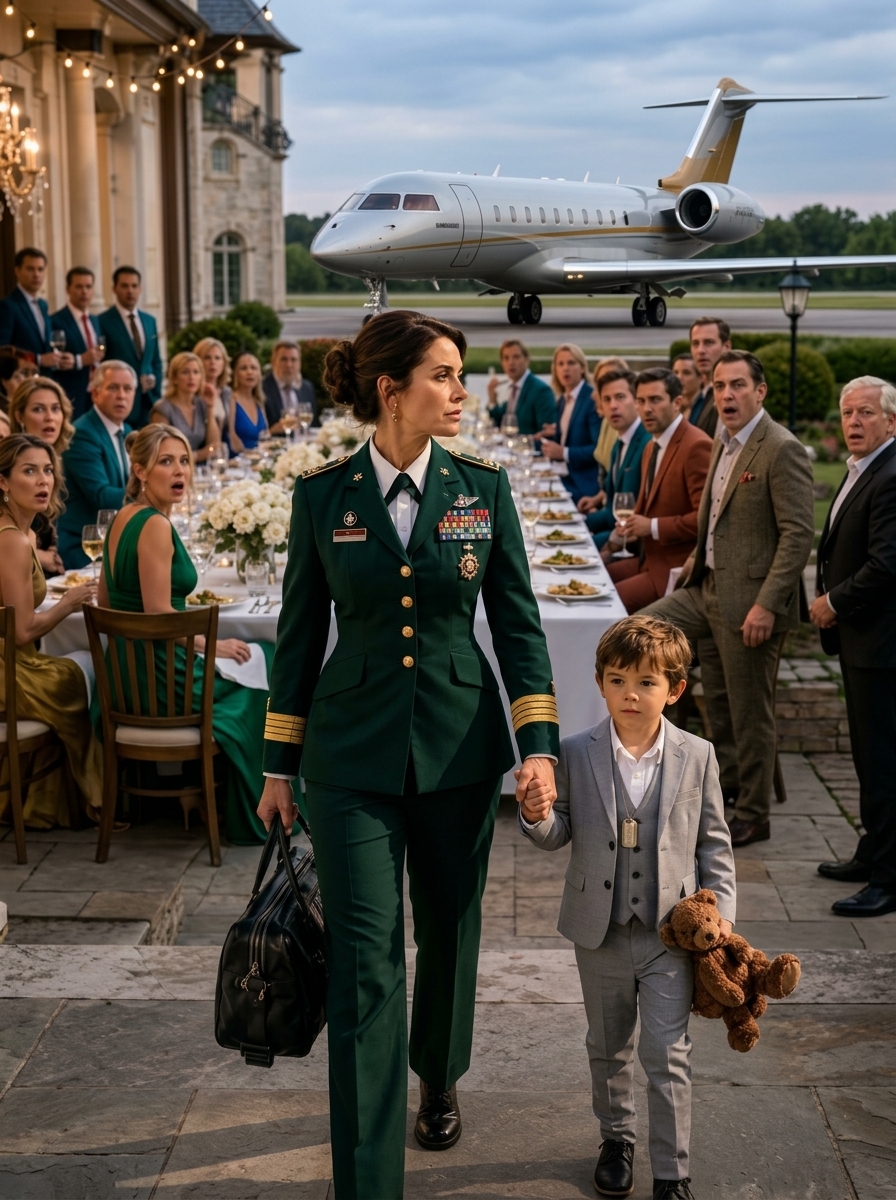
His tiny face looked pale against the pillow.
There was adhesive on his skin.
Advertisement
An IV in his arm.
A stuffed bear a nurse had brought him tucked beneath one hand.
Nathan stood near the wall.
For once, he had nothing to say.
Eventually, the doctor came in.
He looked at me first.
“You administered the epinephrine?”
“Yes.”
“When?”
I told him.
He nodded.
“You did the right thing.”
My hands were still shaking.
“How close was it?”
The doctor paused.
Doctors learn how to choose words carefully.
That pause told me almost as much as the answer.
Advertisement
“Your son had a severe anaphylactic reaction. His airway was becoming compromised. If treatment had been delayed, the outcome could have been very different.”
Nathan finally looked up.
“What does that mean?”
The doctor held his gaze.
“It means you were fortunate his mother acted quickly.”
Nathan’s face lost color.
I looked at Leo.
I didn’t cry.
Not then.
I think my body knew that if I started, I might not stop.
Several hours later, after the doctors were satisfied that Leo was stable enough to leave with strict monitoring instructions, we returned to the lake house because our bags and car were still there.
Advertisement
I thought Nathan’s family might be ashamed.
I thought perhaps seeing an ambulance take away a three-year-old child would finally break through years of arrogance.
I was wrong.
Patricia sat at the kitchen island crying.
Brooke stood behind her with one arm around her shoulders.
Several relatives had already gone home.
The remaining people became silent when we entered.
Patricia looked at Leo.
Then at me.
Not once did she ask if he was okay.
Brooke spoke first.
“You embarrassed Mom.”
Advertisement
For a second, I honestly thought I had misheard her.
“My son almost stopped breathing.”
“You screamed at her in front of everybody.”
“Because she gave him peanuts.”
“It wasn’t like she poured a jar of peanut butter into his mouth.”
My fingers tightened around Leo’s overnight bag.
Nathan stepped between us.
“Can we not do this right now?”
I turned toward him.
His son had just left a hospital.
And he wanted everyone to be quiet so nobody felt uncomfortable.
May you like

My Family Hid Me at Their Veterans Gala—Then a Four-Star General Saluted Me in Front of Everyone
Patricia wiped her face with a tissue.
“I was only trying to help him.”
I stared at her.
“By exposing him to something you knew could kill him?”
“I didn’t know it was that serious.”
“You did.”
“I thought you exaggerated.”
The words were so simple.
So casual.
She had risked Leo’s life because she thought I was annoying.
Nathan rubbed his temples.
“Mom didn’t mean it.”
I turned slowly toward him.
“Your son almost stopped breathing.”
“I know.”
“Do you?”
Advertisement
“Elena, stop.”
That word.
Stop.
Not Patricia.
Not Brooke.
Me.
I looked at the man I had married.
“What exactly would you like me to stop doing?”
“This. Making everything bigger.”
I almost couldn’t breathe.
“Bigger?”
“It was an accident.”
“No. An accident is using the wrong spoon. An accident is not knowing an ingredient was there. Your mother just admitted she deliberately gave Leo something with peanuts because she wanted to prove I was exaggerating.”
Patricia stood.
“I will not be spoken to like a criminal in my own house.”
Advertisement
“You endangered a child.”
Brooke stepped forward.
“Oh, enough.”
Then Patricia said it.
The sentence that erased the final piece of sympathy I had left.
“You owe this family an apology.”
I laughed once.
Not because anything was funny.
Because if I didn’t laugh, I might have said something I regretted.
“An apology.”
“Yes.”
“For what?”
“For humiliating me. For screaming. For turning my husband’s retirement celebration into a spectacle.”
I looked at Nathan.
He avoided my eyes.
“Nathan.”
He sighed.
Advertisement
“Just apologize so we can all go home.”
That hurt more than anything Brooke or Patricia had said.
Because Patricia had never promised to protect me.
Nathan had.
On our wedding day.
In our home.
During every argument when he told me I was his family now.
I took one step closer.
“You want me to apologize to the woman who knowingly gave our child peanuts?”
“I want this fighting to end.”
“It ends when you decide whether your son’s safety matters more than keeping your mother happy.”
Advertisement
His face hardened.
Maybe he was embarrassed because everyone was listening.
Maybe he was tired.
Maybe that was the first moment he realized he couldn’t make both sides comfortable.
Whatever the reason, he made his choice.
“Fine.”
He pointed toward the hallway.
“Apologize, or pack your bags and leave.”
Nobody spoke.
Brooke looked almost satisfied.
Patricia lowered her eyes as if she had won.
And something inside me became perfectly calm.
People sometimes imagine life-changing decisions arrive with dramatic music.
Advertisement
They don’t.
Sometimes they arrive as silence.
I looked at Nathan for several seconds.
Then I nodded.
“All right.”
He blinked.
“What?”
“I’ll leave.”
I walked upstairs.
Nathan followed me.
“Elena, don’t be ridiculous.”
I opened Leo’s suitcase.
“You told me to pack.”
“I was angry.”
“You gave me a choice.”
“You know what I meant.”
“Yes,” I said. “For the first time, I do.”
I packed Leo’s clothes first.
Three shirts.
Shorts.
Pajamas.
His favorite dinosaur sweater.
Medication.
The hospital discharge papers.
Advertisement
Then I packed enough for myself to travel.
Nathan hovered in the doorway.
“You’re seriously doing this?”
I didn’t answer.
From the bottom of my luggage, I pulled out the emergency file he had mocked for years.
A thick waterproof folder.
Inside were copies of our passports.
Leo’s medical history.
Insurance documents.
Financial information.
Immigration papers.
Emergency contact lists.
Legal records.
And a sealed section containing military documentation Nathan had never been authorized to read.
He frowned.
“What’s all that?”
Advertisement
“The paranoia you made fun of.”
“Elena.”
I zipped the bag.
“Move.”
He stepped aside.
Perhaps he believed I would calm down overnight.
Perhaps he thought I would sleep in a hotel and come back embarrassed.
Nathan had grown accustomed to me compromising.
He had never seen me finish an extraction.
By midnight, Leo was sleeping beside me in an airport hotel.
I opened my laptop.
Two tickets to Toronto.
One way.
Confirmed.
Then I began documenting everything.
Hospital paperwork.
Advertisement
Medication administered.
Time of exposure.
Statements I remembered.
Patricia’s admission.
Brooke’s reaction.
Nathan’s ultimatum.
I saved copies in three secure locations.
Then I contacted the people who needed to know where I was going.
Not because my military position gave me some magical authority over family law.
It didn’t.
I was a mother leaving a dangerous situation with a sick child.
My rank could not erase legal procedures.
But my training had taught me one thing very well.
Document first.
Advertisement
React second.
At 5:40 the next morning, I woke Leo.
He looked exhausted.
“Are we going home, Mommy?”
I knelt in front of him.
“Yes.”
“To Daddy?”
The question almost broke me.
I kissed his forehead.
“We’re going somewhere safe.”
At the airport, Nathan’s calls started.
One.
Three.
Seven.
Twelve.
By the time we cleared security, twenty-seven.
I ignored them all until we were approaching the gate.
Then I answered.
“Elena.”
His voice came fast.
Angry.
Panicked.
“Where are you?”
“At the airport.”
“What airport?”
I didn’t respond.
“Stop being dramatic and bring my son home.”
“Our son almost died because your mother wanted to prove a point.”
“She feels terrible.”
“She wanted me to apologize.”
“She was upset.”
“And you supported her.”
“I was trying to keep everyone calm.”
“You told me to leave.”
“I didn’t think you would actually do it!”
There it was.
He had expected the threat to work.
He had expected me to choose humiliation over losing my marriage.
He had expected me to teach Leo, someday, that family could endanger him and still deserve an apology.
I looked at my son asleep against my shoulder.
That would never happen.
Nathan’s tone changed.
“Where are you going?”
“Toronto.”
Silence.
Then his voice dropped.
“No.”
“It isn’t a negotiation.”
“You’re still my wife. You don’t get to leave the country with my son.”
That was when the two uniformed officers approached.
They were there because my return had required coordination.
Nothing theatrical.
Nothing designed for Nathan.
Just two professionals doing their jobs.
One stopped beside me.
“Colonel Morris, your transportation is ready.”
Nathan heard him.
Every word.
“What did he just call you?”
I closed my eyes for half a second.
Years of marriage.
Years of his family calling me dramatic.
Years of letting them believe quietness meant weakness.
I looked at Leo.
“The woman your family spent years underestimating.”
I ended the call.
Nathan called again immediately.
I turned my phone off.
Then I boarded the flight.
Toronto appeared beneath us several hours later beneath a gray-blue morning sky.
The moment the plane landed, something inside me loosened.
Not completely.
I knew the worst might not be over.
Leaving was only the first step.
Nathan was still Leo’s father.
There would be lawyers.
Questions.
Documents.
Custody discussions.
Accusations.
But Leo was alive.
That was enough for one morning.
A vehicle was waiting outside the terminal.
On the drive, Leo watched buildings through the window.
“Mommy?”
“Yes?”
“Grandma made me sick?”
My throat tightened.
Three years old.
Too young to understand cruelty.
Old enough to remember fear.
I chose every word carefully.
“Grandma gave you food that wasn’t safe.”
“Did she know?”
I couldn’t lie.
“Yes.”
He looked down.
Then he whispered, “Daddy knew?”
I reached across and took his hand.
“Daddy knows now.”
That evening Nathan sent me a message.
WE NEED TO TALK.
I didn’t respond.
Another arrived.
MY MOM SAID SHE’S SORRY.
Then:
YOU CAN’T KEEP LEO FROM ME.
And finally:
WHY DIDN’T YOU TELL ME YOU WERE A COLONEL?
That one told me everything.
Not:
Is Leo okay?
Not:
I should have protected him.
Not:
I was wrong.
He wanted to know about my rank.
I replied once.
Leo is safe. Future communication regarding travel, medical decisions and custody will be documented. Do not contact me by phone unless there is an emergency concerning Leo.
Seconds later, the phone rang.
I let it ring.
Over the next forty-eight hours, the Whitaker family story began changing.
According to Brooke, Leo had accidentally dipped his own food into the sauce.
According to Patricia, she had forgotten about his allergy.
According to another relative, nobody had even known there were peanuts in the sauce.
Three versions.
All different.
All contradicted by what had been said at the lake house.
Then Nathan sent me a message I still have saved.
Mom says you misunderstood her. She didn’t deliberately hurt him.
I stared at the screen.
Then another message appeared.
Brooke thinks you planned this because you wanted an excuse to go back to Canada.
That was the moment anger became useful.
I stopped defending myself.
I started collecting evidence.
I requested the complete hospital record.
I preserved the discharge instructions.
I saved Nathan’s messages.
Then something arrived that none of them expected.
A relative who had been standing near the kitchen that night contacted me privately.
She had recorded a short video of the retirement celebration.
Most of it was useless.
People laughing.
Music.
Someone cutting cake.
But in the background, just before Leo became sick, two voices could be heard.
Brooke’s.
And Patricia’s.
Brooke said, “Elena is going to lose her mind.”
Patricia answered, “It’s barely any. Maybe when nothing happens, she’ll finally stop acting insane.”
I played it twice.
Then I closed the file.
My hands were cold.
Patricia had known.
Not only had she known.
She had expected a reaction from me.
Leo had been used to win an argument.
I forwarded the video to my lawyer.
Not to Nathan.
Not yet.
Nathan filed first.
He wanted Leo returned.
He claimed I had acted impulsively after a family disagreement.
He described Patricia’s conduct as an unfortunate misunderstanding.
And he described me as secretive.
That word appeared more than once.
Secretive.
He pointed to my military career.
My classified work.
The fact that he had not known my rank.
For the first time, Nathan tried to turn the very discipline that had protected our family into evidence against me.
My lawyer asked me a simple question.
“Did your husband know your work involved classified responsibilities?”
“Yes.”
“Did he understand that you could not disclose protected information?”
“Yes.”
“Did you ever lie to him about serving?”
“No.”
“Did your rank have anything to do with what happened to Leo?”
“No.”
“Then we keep the issues separate.”
Exactly.
I didn’t want special treatment.
I wanted facts.
A child had a documented life-threatening allergy.
Family members knew.
He was exposed.
He developed anaphylaxis.
Emergency medication was required.
A hospital confirmed the severity.
His grandmother admitted knowing about the allergen.
His father responded by demanding his mother apologize.
Those were the facts.
My uniform changed none of them.
Weeks passed.
Nathan became increasingly desperate.
He contacted me through the approved channels.
At first his messages were angry.
Then defensive.
Then pleading.
“Elena, I didn’t know Mom actually did it on purpose.”
I read that sentence several times.
Then replied:
You were standing there when she said it was only a tiny amount.
His next response took almost an hour.
I thought she was just trying to defend herself.
Exactly.
He had always found a version of reality that allowed him not to confront her.
Then I sent him the video.
He watched it.
I knew because the platform showed the file had been opened.
Nathan said nothing for the rest of the day.
The next morning, I received one message.
I’m sorry.
Two words.
Once, they might have been enough to make me question myself.
Not anymore.
I replied:
You had the opportunity to protect your son before you knew my rank, before lawyers were involved, before you saw the video. You chose your mother.
He called.
For once, I answered.
His voice sounded different.
“Elena, please.”
“What?”
“I didn’t understand.”
“You understood that Leo had gone to the hospital.”
“I know.”
“You heard the doctor.”
“I know.”
“You heard your mother say she gave him a tiny amount.”
Silence.
“And then you told me to apologize to her.”
“I made a mistake.”
“No, Nathan. You made a decision.”
He started crying.
I had almost never heard Nathan cry.
“I don’t want to lose my family.”
I looked through the window.
Leo was sitting on the floor across the room building a tower from wooden blocks.
He was laughing.
Breathing normally.
Alive.
“You should have thought about that before you made your family choose between safety and obedience.”
“I love Leo.”
“I believe you.”
That surprised him.
“Then why are you doing this?”
“Because loving him isn’t enough if you won’t protect him.”
The legal process moved forward.
Patricia’s version collapsed under scrutiny.
The video mattered.
So did the medical documentation.
So did statements from witnesses.
So did Nathan’s own messages.
The issue was never whether Patricia intended to kill Leo.
Nobody claimed she did.
The issue was that she knowingly ignored a documented medical danger because she believed she knew better than the child’s mother and doctors.
That distinction mattered.
So did Nathan’s reaction afterward.
Eventually, arrangements were established that prioritized Leo’s medical safety.
Nathan was not erased from his son’s life.
I never asked for that.
Leo loved his father.
Children should not be used as weapons in adult anger.
But boundaries were imposed.
Strict ones.
Nathan’s family would not have unsupervised access to Leo.
His medical restrictions were not optional.
Emergency medication had to remain immediately available.
Nathan had to demonstrate that he understood his son’s allergy and how to respond.
And Patricia would not be permitted to turn “building tolerance” into another experiment.
When Nathan came to Toronto for his first arranged visit, I barely recognized him.
He looked older.
Tired.
Smaller somehow.
Not physically.
Just stripped of the certainty he used to carry.
He noticed my uniform hanging inside the hallway closet.
For a long time, he stared at it.
Colonel.
The rank insignia that had shocked him at the airport.
“You really were never going to tell me?” he asked.
I looked at him.
“I would have told you when I was permitted and when it became relevant.”
“I was your husband.”
“Yes.”
“That should have meant something.”
“It did.”
He flinched.
I continued.
“But being my husband didn’t give you clearance to classified information.”
He looked toward the room where Leo was playing.
“Was everything about you a secret?”
“No.”
“My favorite food wasn’t classified.”
He almost smiled.
I didn’t.
“The way I take my coffee wasn’t classified. The way I held your hand when your father had surgery wasn’t classified. The fact that I loved you wasn’t classified.”
His eyes dropped.
“Then why does it feel like I never knew you?”
“Because you mistook quiet for weakness.”
That hit him.
I could see it.
“So did your family.”
Nathan sat down.
“I should have defended you.”
“No.”
He looked up.
“You should have defended Leo.”
That was the difference he still struggled to understand.
Our marriage wasn’t ending because his mother disliked me.
It wasn’t ending because Brooke insulted me.
It wasn’t even ending because Patricia had made one reckless decision.
It was ending because when our three-year-old son nearly died, Nathan’s first instinct afterward was still to protect the feelings of the people responsible.
Months later, I returned to the United States once for the remaining legal matters and to collect property that still belonged to me.
The lake house looked exactly the same.
Same deck.
Same water.
Same kitchen island.
The string lights had been removed.
I stood for a moment near the place where Leo’s plate had shattered.
Patricia came outside.
She looked nervous.
We had not spoken directly since that night.
“Elena.”
I waited.
“I never wanted him hurt.”
“I know.”
She seemed surprised.
“I love Leo.”
“I know that too.”
Tears filled her eyes.
“Then you understand.”
“No.”
My voice stayed calm.
“That’s the problem, Patricia. You think love excuses what you did.”
She looked down.
“I made a mistake.”
“You made a choice based on the belief that you knew better than everyone else. Then when he ended up in the hospital, you wanted an apology.”
Her face crumpled.
“I was humiliated.”
“My son couldn’t breathe.”
She had no answer.
Neither did Brooke when I saw her later.
The Whitakers had spent years believing the loudest person in the room controlled the truth.
That night taught them otherwise.
Before I left, Nathan met me by the driveway.
“I keep thinking about the airport,” he said.
I stopped.
“Why?”
“The officer calling you Colonel Morris.”
I said nothing.
“I remember thinking I had no idea who you were.”
I looked toward the lake.
“You did know me.”
He frowned.
“You knew I checked Leo’s food.”
“You knew I carried medication.”
“You knew I kept emergency documents.”
“You knew I stayed calm in crises.”
“You knew I asked people to respect medical instructions.”
“You knew all of that.”
He swallowed.
“You just thought those things were annoying until you learned they came from someone with a rank you respected.”
Nathan looked away.
That was the closest he ever came to admitting it.
I drove away from the lake house without looking back.
Toronto became home again.
Not immediately.
Healing rarely happens as quickly as leaving.
Leo had nightmares for a while.
He became nervous around unfamiliar food.
Sometimes he asked me three or four times whether something was safe before eating it.
I never told him to stop worrying.
I taught him what he needed to know.
“This is your medicine.”
“This is how you ask an adult about ingredients.”
“If your mouth feels funny, tell someone immediately.”
And most importantly:
“If someone tells you that your safety is silly, you come to me.”
He always nodded very seriously.
Nathan continued visiting.
Slowly, painfully, he began learning.
He took allergy training.
He practiced with trainer injectors.
He stopped defending Patricia.
Whether that change came too late for our marriage was no longer a question.
It had.
Some things can be repaired.
Trust, sometimes.
Communication, sometimes.
Even families.
But there are moments when a person shows you the order of their priorities so clearly that forgetting would require betraying yourself.
Nathan had been given one of those moments.
His child had just survived anaphylaxis.
His mother had admitted causing the exposure.
His wife stood in front of him asking only that he acknowledge what had happened.
And he told me to apologize or leave.
So I left.
People who eventually learned the full story sometimes focused on the wrong part.
They loved the airport moment.
The uniformed officers.
The shocked silence.
“Colonel Morris.”
Nathan discovering that the wife his family had mocked held a senior military rank.
They treated it as though that had been my victory.
It wasn’t.
My rank didn’t save me.
My uniform didn’t make Patricia wrong.
Military authority didn’t make me a better mother.
The most important thing I carried through that airport wasn’t classified information.
It wasn’t my service record.
It wasn’t my rank.
It was a sleeping three-year-old boy whose chest was still rising and falling because when everyone else hesitated, I had acted.
That was enough.
One year after the lake house incident, Leo and I were walking through Toronto on a bright summer afternoon.
He was holding my hand.
In the other, he carried a little backpack containing his emergency medication.
He had chosen the backpack himself.
Dinosaurs.
Of course.
We stopped at a small café.
Before eating his cookie, Leo looked at the server.
“Does this have peanuts?”
The server checked carefully.
“No peanuts. And we’ve followed the allergy precautions your mom requested.”
Leo looked at me proudly.
“See, Mommy? I checked.”
I smiled.
“You did.”
He took a bite.
A few minutes later, my phone vibrated.
A message from Nathan.
How is he?
I took a picture of Leo smiling with cookie crumbs around his mouth.
I sent it.
Safe. Happy. Growing.
Nathan replied a minute later.
Thank you for protecting him when I didn’t.
I stared at those words for a long time.
There was a time when I would have needed them.
A time when hearing Nathan admit the truth might have changed everything.
Now they simply felt honest.
And honesty was enough.
I put my phone away.
Leo reached for my hand.
“Mommy?”
“Yes?”
“Are we going home now?”
I looked at my son.
At the city around us.
At the life I had rebuilt from the night his father told me to apologize to people who nearly killed him.
Then I squeezed his hand.
“Yes.”
We walked toward home together.
And for the first time in years, that word meant exactly what it was supposed to mean.
Not a house.
Not a marriage.
Not a family name.
Home was the place where my child was safe.
Where his medical condition was believed.
Where love did not require silence.
Where nobody could endanger him and demand an apology afterward.
The Whitakers once believed I was too cautious.
Too quiet.
Too prepared.
They believed the emergency file was paranoia.
They believed my discipline was weakness.
They believed I would always compromise because that was easier than fighting.
They were wrong.
Because when Nathan gave me his final choice—
Apologize.
Or leave.
—I finally gave him mine.
I chose my son.
And I never regretted it.